


Volos Academy for Theological Studies participates in the Annual Meeting of the European Academy of Religion, which is held in Rome, between June 30 and July 3, 2026, with three panels:
Panel 1:
WHY THEOLOGY STILL MATTERS TODAY? THE PUBLIC WITNESS OF METR. JOHN ZIZIOULAS’S THEOLOGY.
Wednesday, July 1, 17:20 to 19:30, Hall Parenzo A8. Speakers: Peter De Mey, Aristotle Papanikolaou, Pantelis Kalaitzidis, Bishop Maxim Vasiljevic, Chair: Nikos Kouremenos.
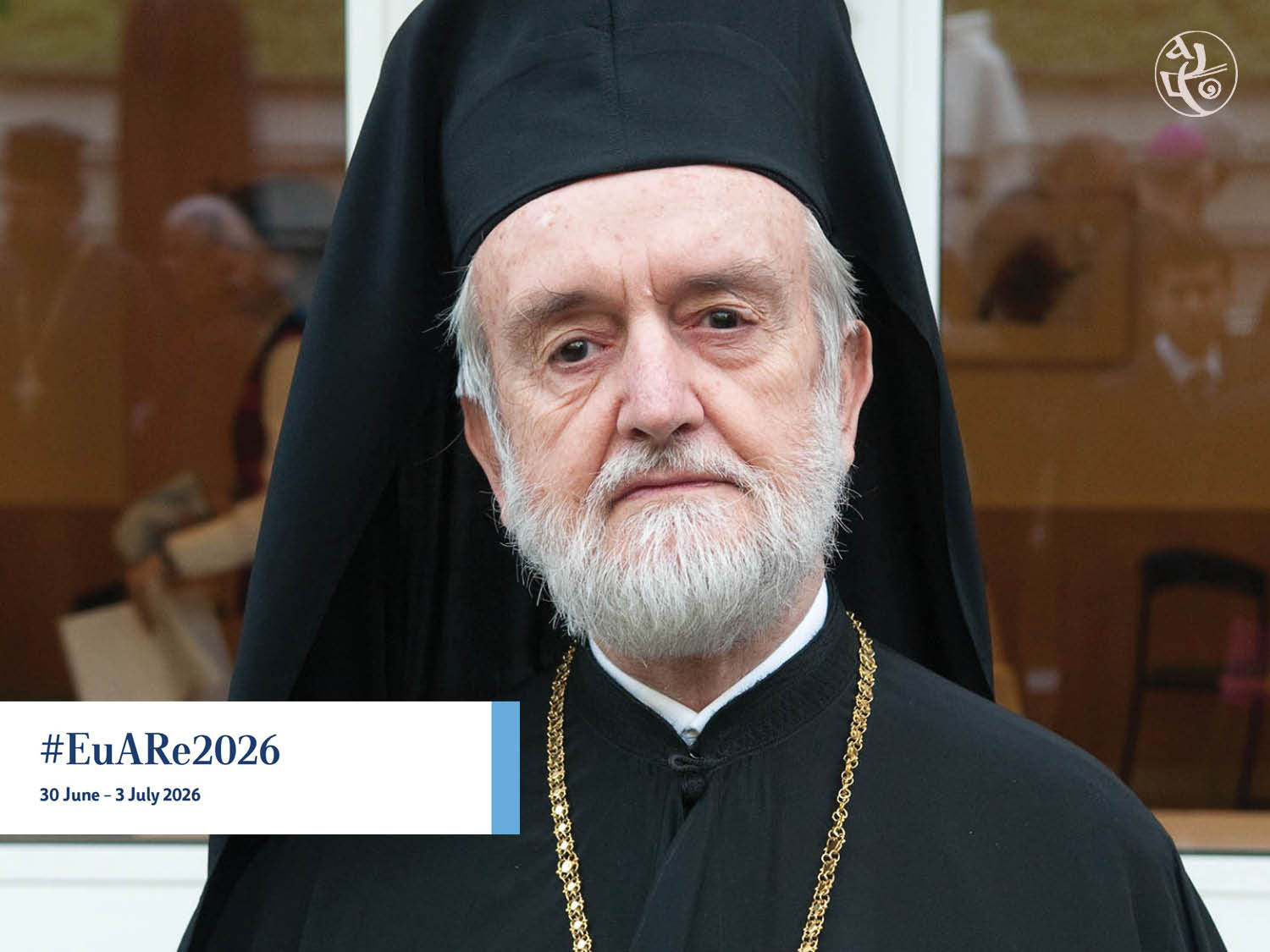
Metropolitan John Zizioulas of Pergamon is widely recognized as one of the most significant Orthodox theologians of our time. His theological vision emphasizes personhood as the fundamental mode of existence for both God and humanity. He identifies the Eucharist as the setting where this personhood is momentarily realized and presents an eschatological perspective that shapes his entire hermeneutics and methodology. This coherent and systematic approach may prove relevant to the future of Orthodox theology, especially in light of various challenges, such as religious rigorism, ideological populism, and issues posed to anthropology and the environment by artificial intelligence and the climate crisis. Critics argue that history, as both a horizon and context, is somewhat diminished in his work; however, it remains a crucial backdrop against which Christianity has evolved and matured since its inception. In this regard, Zizioulas’s thought engages in a continuous dialogue with the surrounding pre-modern, modern, and post-modern intellectual and social settings. What elements of his thought are relevant to our current scientific and ideological context? How does his eschatological outlook inform our responses to various forms of moral and social evil? What meaningful role can Hellenic philosophy play today in the context of a gradual de-ontologization of Christianity's character? Is the dialectic between nature and personhood still valuable? Are Zizioulas’s theological contributions being taken seriously in the field of Ecumenical theology today? Drawing from his posthumous magnum opus, Remembering the Future, and the recently published English translation, Hellenism and Christianity: The Encounter of Two Worlds, a panel will critically reflect on aspects of Zizioulas’s public witness in our contemporary, fragmented, and complex world. The focus will be on those aspects that are relevant to the Church in carrying out her mission in the future.
Panel 2.
INJUSTICE & SOCIAL TRANSFIGURATION IN THE ANTHROPOCENE: AN ORTHODOX CHRISTIAN PERSPECTIVE.
Wednesday, July 1, 2026, 15:00 to 17:10, Hall Parenzo A8. Speakers: Chris Durante, Christina Nellist, Frances Kostarelos, Chair: Nikolaos Asproulis
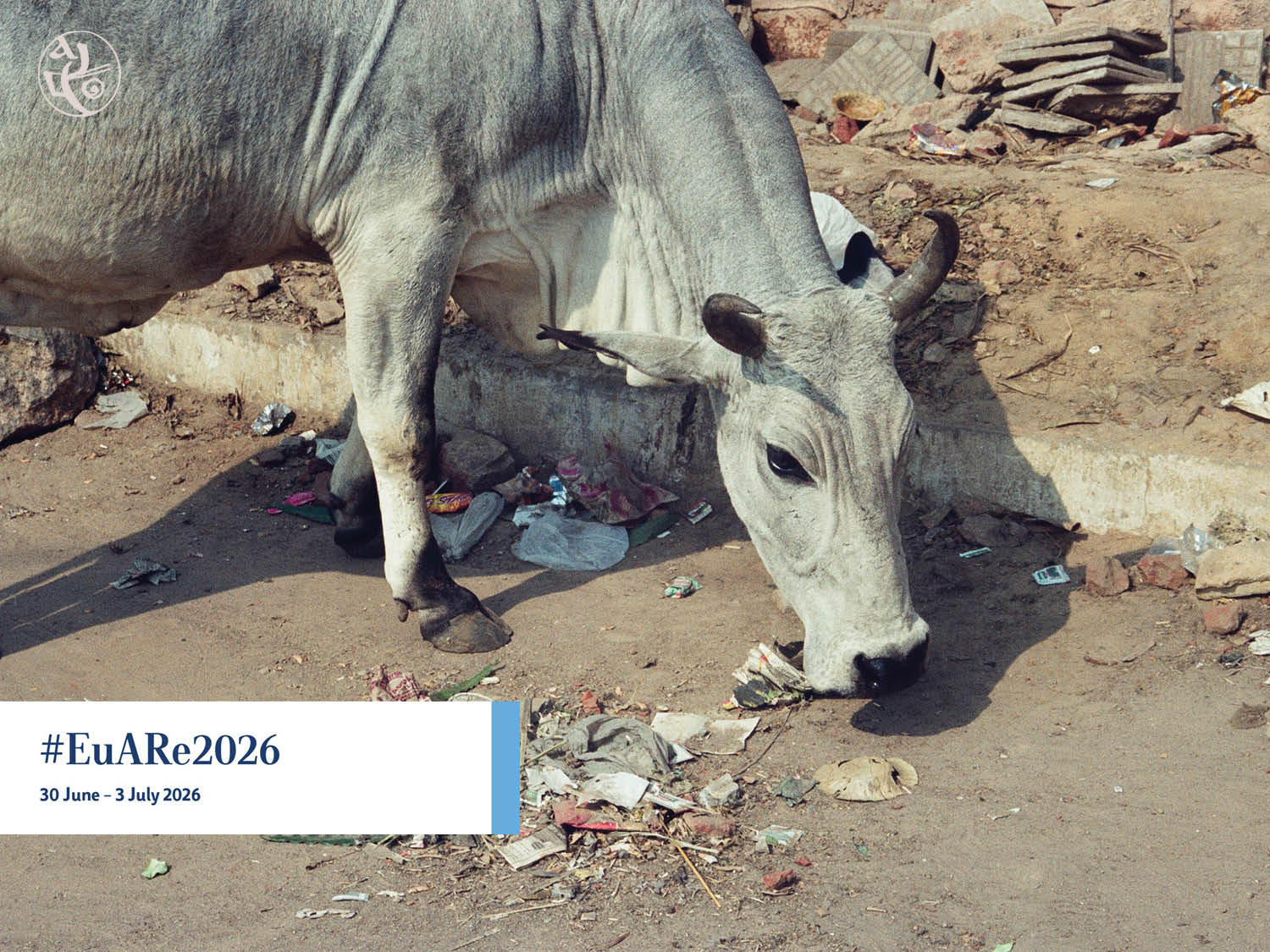
We are currently living in the Anthropocene, a time of polycrisis defined by humanity’s collective self-conceit as a technologically advanced species that produces myriad environmental, social and economic injustices. As Ecumenical Patriarch Bartholomew says, “[t]he root cause…lies in our self-centeredness and in the mistaken order of values, which we inherit and accept without any critical evaluation…” This order of values is rooted in a neoliberal consumeristic vision of prosperity as abundance in which the vices of arrogance, greed, gluttony and indifference, rather than virtues, such as justice, prudence, or compassion, are actively promoted. This neoliberal socioeconomic system forces people worldwide to view both nature and our fellow human beings as bearing merely a utilitarian value to be exploited for pleasure or profit so, even people who engage in this system unwillingly or unknowingly are guilty of what Orthodox theologians call involuntary sin. Therefore, “What is asked of us is not greater technological skill but deeper repentance, metanoia, in the literal sense of the Greek word, which signifies fervent ‘change of mind’ and radical transformation of lifestyle” (Patriarch Bartholomew 2009). Such a social transfiguration requires practicing a “communal asceticism” (Patriarch Bartholomew 1997) that will entail cultivating nēpsis, a state of mindfulness, which can enable a recognition of how our pathological desires (pathoi) for material wealth or social status have been manipulated for profit by powerful elites who exacerbate inequalities and advance the value system at the heart of our polycrisis. Further, it requires a view of flourishing as relational rather than acquisitive and the development of socioeconomic practices rooted in a eucharistic disposition of gratitude for one another and nature so that,“the economy becomes a servant of humanity, not its master” (Patriarch Bartholomew 1999)
Panel 3.
Author meets critique: PANTELIS KALAITZIDIS, “ORTHODOXY AND MODERNITY: INTRODUCING A CONSTRUCTIVE ENCOUNTER”, BRILL, 2026.
Thursday, July 2, 15:00 to 17:10, Hall Pola Aula Magna. Speakers: José Casanova, Aristotle Papanikolaou, Kristina Stoeckl, Chair: Hans Peter Grosshans & Pantelis Kalaitzidis
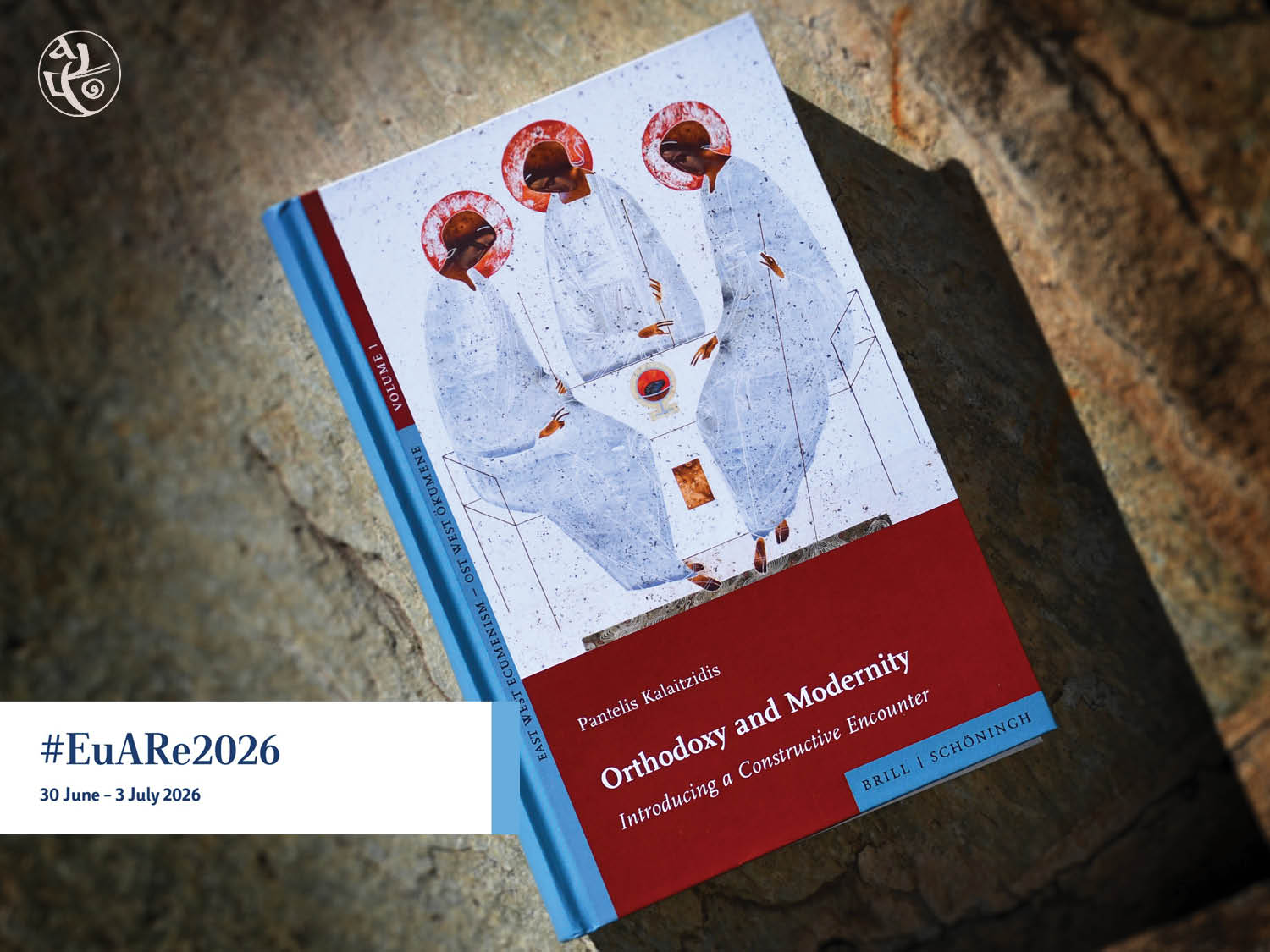
Did Orthodoxy come to a halt before modernity? Does Orthodox Christian theology function only in traditional contexts, borrowing schemes and forms of rural society, to which the liturgical and theological symbolisms, the rhetorical models of preaching, the structures of church administration, and its views on the relation between religion, politics, and secular society are closely linked? Has Orthodoxy accepted the consequences of modernity, or does the Orthodox still feel a nostalgia for pre-modern forms of organization and structures of a glorified past, following in this way fundamentalism? Did even the movement ctod "Return to the Fathers", as it was understood, and despite its initially renewing character, function unwittingly as a barrier against modernity and its chtonges? Modernity and post-modernity constitute, however, the broader historical, social, and cultural context within which the Church is ctod to accomplish its mission and to ceaselessly incarnate the Christian truth. In this book, Kalaitzidis argues that theology as a prophetic voice and expression of the self-understanding of the Church can only function in reference to the antinomy and the duality of the latter. Just as the Church is not of this world, so is theology aiming to express a charismatic experience and a transcendental reality, over and above words, concepts, or names. Just as the Church lives and goes forth in the world, so is theology seeking dialogue and communication with each historical present, following the language, the flesh, and the schemes of every given era, of each historic and cultural present. Theology is not exhausted by nor is it identified with History, but neither can it function in the absence of History, and more importantly, it cannot ignore the teachings of History. After all, the Revelation of God has always taken place inside the creation and History, not in some unhistoric, timeless, and unearthly universe.
See the complete programme of the EuARe Conference here

.jpg)

.jpeg)