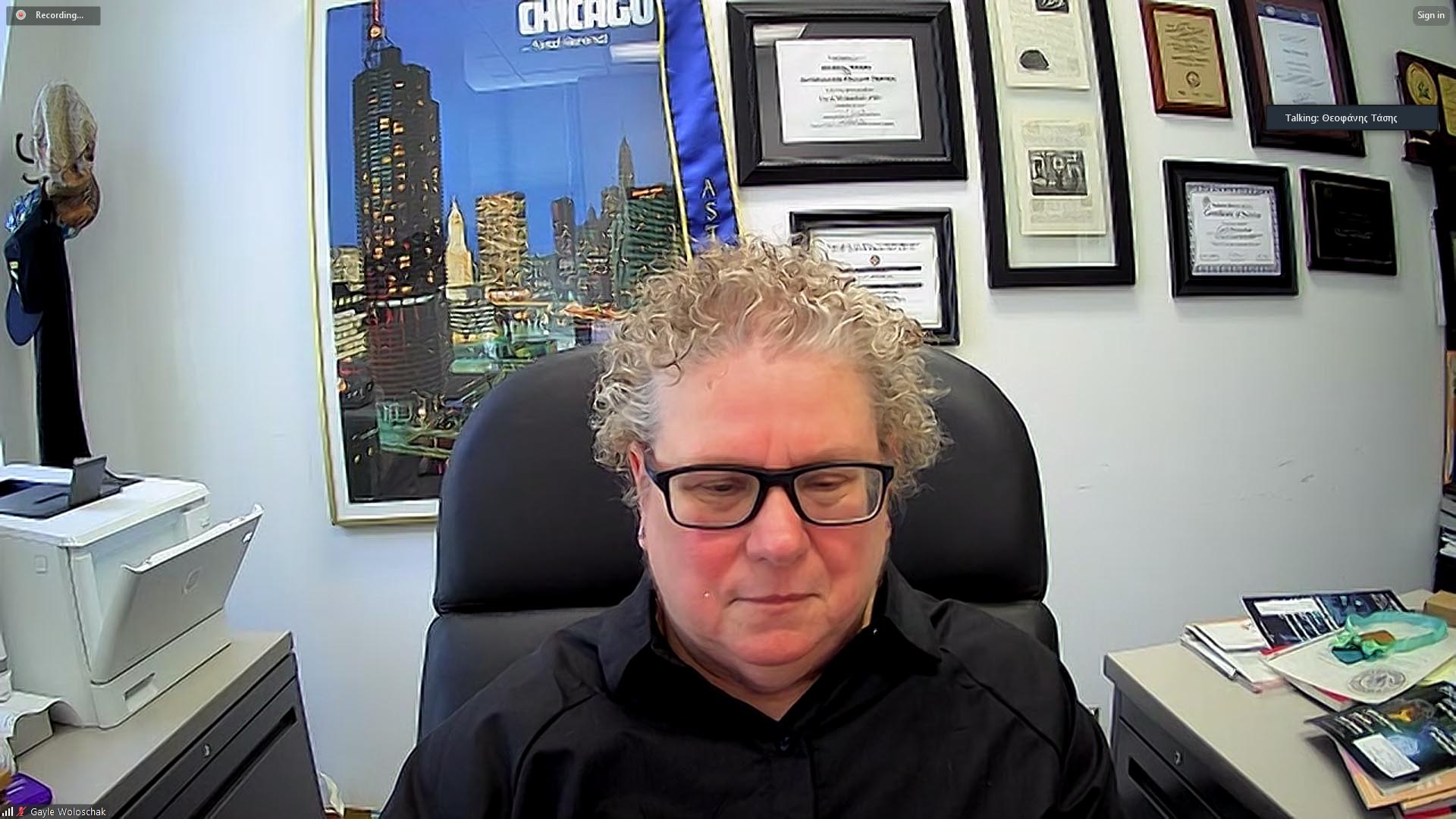
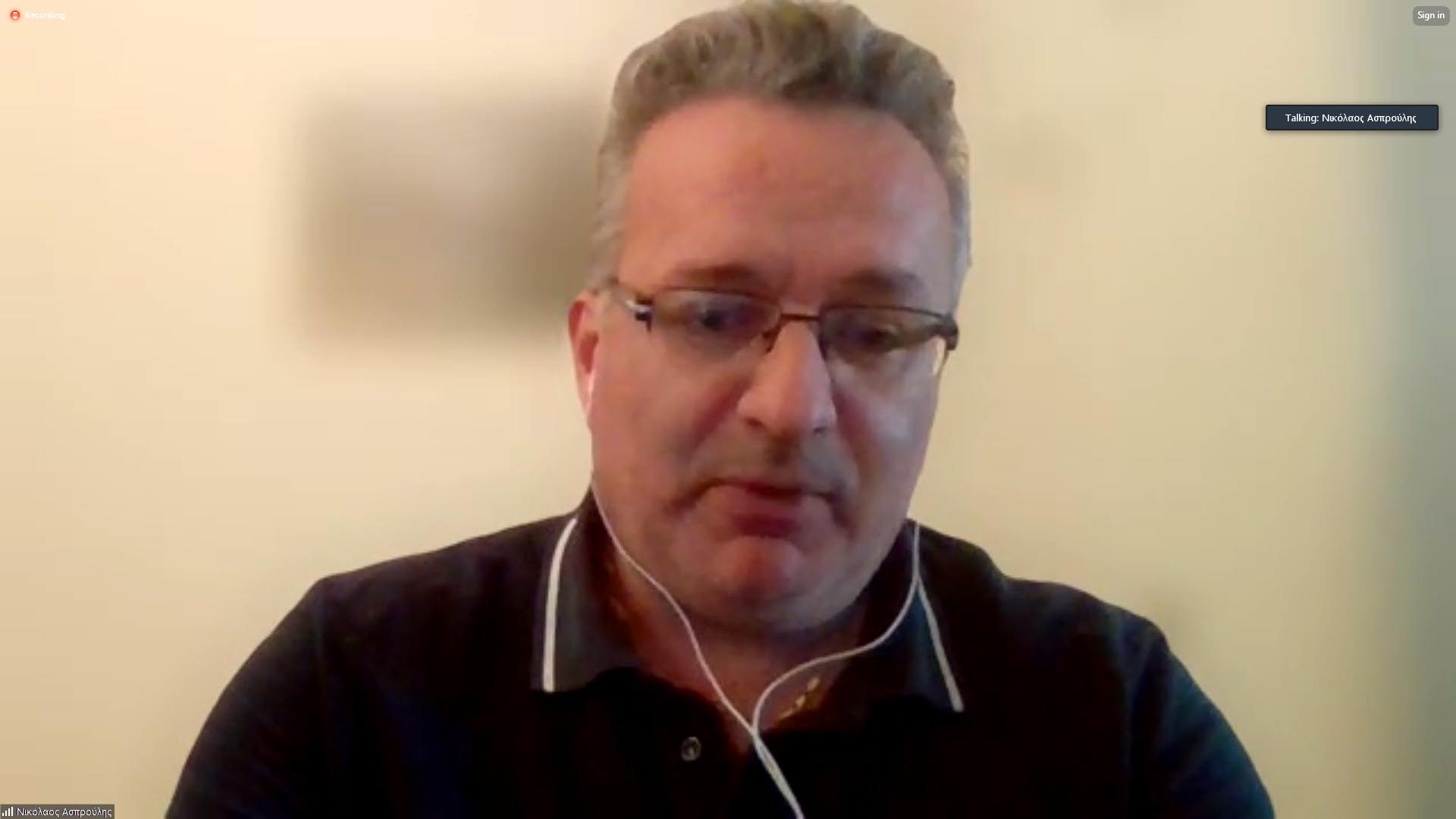
The fourth event of the “Time for Action” series was successfully held on Monday, April 15, 2024. It was the round table on “Artificial Intelligence: Threat or Blessing?” Participants were Dr. Theofanis Tassis (Lecturer of Contemporary Practical Philosophy at Alpen-Adria University, Austria and Visiting Professor at St. Gallen University, Switzerland) and Dr. Gayle Woloschak (Professor, Department of Radiation Oncology and Radiology at Northwestern University, USA). The discussion was moderated by Dr. Nikolaos Asproulis (Deputy Director of the Volos Academy for Theological Studies).

Speaking first, Theofanis Tassis emphasized that Artificial Intelligence has developed at a rapid pace in recent years, however it is not expected to become conscious, as consciousness presupposes some kind of physical body, and Artificial Intelligence programs cannot intervene by altering computers, at least up to date. He raised the question of the alignment of Artificial Intelligence with human values, underlining the fact that some unsettling applications have already appeared, such as e.g. the creation of digital human clones that function autonomously. He emphasized that AI should be limited to instrumental activities (such as waste management) and underlined that legislation moves slowly without entering into the research itself, while there is a need for an interdisciplinary approach so that AI does not end up unethical and dangerous. He concluded his presentation by posing the question of what man is, after all.
In her turn, Gayle Woloschak started from the question of what is ethical, stressing that technology itself is neither ethical nor immoral, but depends on its use. He explained the concept of machine learning, data analysis and decision making, listing fields where Artificial Intelligence finds application today, performing tasks that are impossible to perform by the human mind in a finite amount of time. He explained that AI specializes in producing work with minimal human input, but underlined the need for human control of the results produced by it, as well as more general accountability, the development of truly open and transparent AI systems, and the elimination of biases resulting from insufficient data collection. He summarized the positive and negative sides of the use of Artificial Intelligence, emphasizing the fields of Medicine and Theology, making the observation that post-modern technology leads to the same questions posed by pre-modern theology, and underlining that in all problems there is a need to discern so that we don't rehash the old answers but understand what the current reality is.
The video recording of the event is available on the YouTube channel of Volos Academy, in English (https://youtu.be/6A-gQiWcMpA) and in Greek (https://youtu.be/iD6anWr-EM4). The next event of the “Time for Action” series will be the lecture by Paul Ladouceur on April 25, as already announced.

.jpg)