
We are very pleased to announce, that the General Assembly of RESILIENCE appointed Francesca Cadeddu (FSCIRE), Roxanne Wyns (LIBIS/KU Leuven), and Ahmet Alibasic (University of Sarajevo) as executive directors of the RESILIENCE Research Infrastructure for the period 2022-2025.
RESILIENCE (part of which is the Volos Academy for Theological Studies) recently entered the ESFRI Roadmap 2021 and started its Preparatory Phase 2022-2025, which is the period in which the executive directors will function.
The role of the executive directors is to translate the strategic plan set up by the General Assembly into a work plan and to ensure its proper implementation. Together, the three executive directors will lead the consortium in the direction of an ERIC (European Research Infrastructure Consortium, a legal entity), which is expected to start in 2025.
The general director will be Francesca Cadeddu (FSCIRE, Bologna). Roxanne Wyns (LIBIS/KU Leuven) and Ahmet Alibasic (University of Sarajevo) will be the two deputy directors, responsible for technical innovation strategy and the sustainability and consolidation of the consortium.
RESILIENCE is pleased that these experienced and capable people are willing to take their positions as directors, and will serve the consortium in different ways.
About the Directors
Francesca Cadeddu is researcher in Contemporary History at the University of Modena and Reggio Emilia since 2020 and affiliated researcher at FSCIRE, the leading RESILIENCE institution, since 2011. She works on religious diversity and religious illiteracy in Europe, and in the past seven years she contributed to the establishment of RESILIENCE and the European Academy of Religion.
Roxanne Wyns is innovation manager at LIBIS and specializes in large digital research infrastructure projects in Social Sciences and Humanities. She has a special interest in semantic interoperability and FAIR and trusted data infrastructures.
Ahmet Alibasic is an associate professor and deputy Dean for academic affairs at the Faculty of Islamic Studies, University of Sarajevo, teaching Islamic civilization courses. He is one of the editors of the Yearbook of Muslims in Europe (Brill, 2009-2022).
Reactions
Francesca Cadeddu: “RESILIENCE is built to serve the community of Religious Studies with services, facilities, and experts whose aim is not only to make research easier and faster, but most importantly to improve the quality of the knowledge gained and its impact for society at large. My work on the board will be conducted by always keeping in mind the needs of the scientific community, with the purpose of leveraging its abilities and enhancing its capacity to face the challenges of today’s society with knowledge and information.”
Roxanne Wyns: “Research is becoming a more collective and collaborative process where the availability and sharing of high-quality data is an important foundation for scientific progress. I look forward to working with the other RESILIENCE directors towards establishing FAIR (Findable, Accessible, Interoperable, Reusable) and trusted services enabling open data sharing for our research community.”
Ahmet Alibasic: “From the start, RESILIENCE has been about creating new opportunities and possibilities for stakeholders in Religious Studies across Europe. So far, by combining experience and energy, mega data collections of major European universities and the precious collections of smaller institutions, and the diversity of all involved, it has delivered on its promise. Now we enter a new phase confident that we will manage to bring the long-term vision of a fully developed pan-European research infrastructure in Religious Studies closer to reality.”
Editorial Notes
About RESILIENCE
RESILIENCE is a unique, interdisciplinary and invigorating research infrastructure for Religious Studies, building a high-performance platform, supplying evolving tools and big data to scholars from all the scientific disciplines crossing religions in their diachronical and synchronical variety.
The ESFRI Forum included RESILIENCE in its 2021 Roadmap. This means that RESILIENCE will take its place in the strategic framework for Research Infrastructures in the European Research Area.
About ESFRI
ESFRI is the European Strategy Forum on Research Infrastructures. It is a strategic instrument to develop the scientific integration of Europe and to strengthen its international outreach. The ESFRI Roadmap is a key instrument through which the ESFRI Forum establishes long term European strategic planning for the development of Research Infrastructures. www.esfri.eu .
Resources
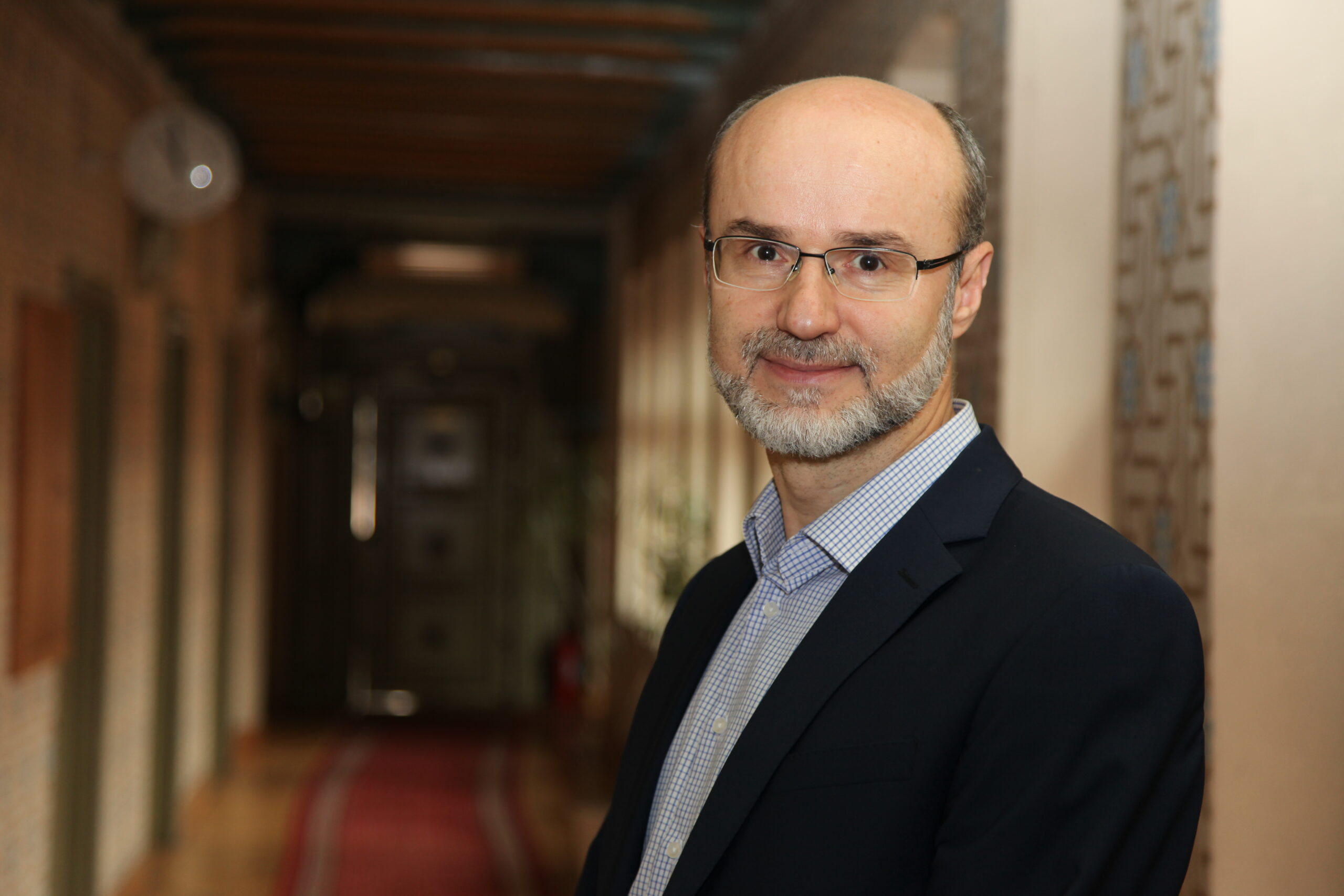
Here you can download images of the three directors:


Contact
Volos Academy for Theological Studies
Melissiatika, Volos- Greece, Zip Code 38001, P.O. 1308,
Tel: +30 24210-93553
This email address is being protected from spambots. You need JavaScript enabled to view it.
Nikolaos Asproulis: This email address is being protected from spambots. You need JavaScript enabled to view it.
Costis Drygianakis: This email address is being protected from spambots. You need JavaScript enabled to view it.
For more information about RESILIENCE: www.resilience-ri.eu