Summary of Online lecture
Ziad El Sayegh
CHRISTIANS IN THE MIDDLE EAST:
CHALLENGES AND CHOICES
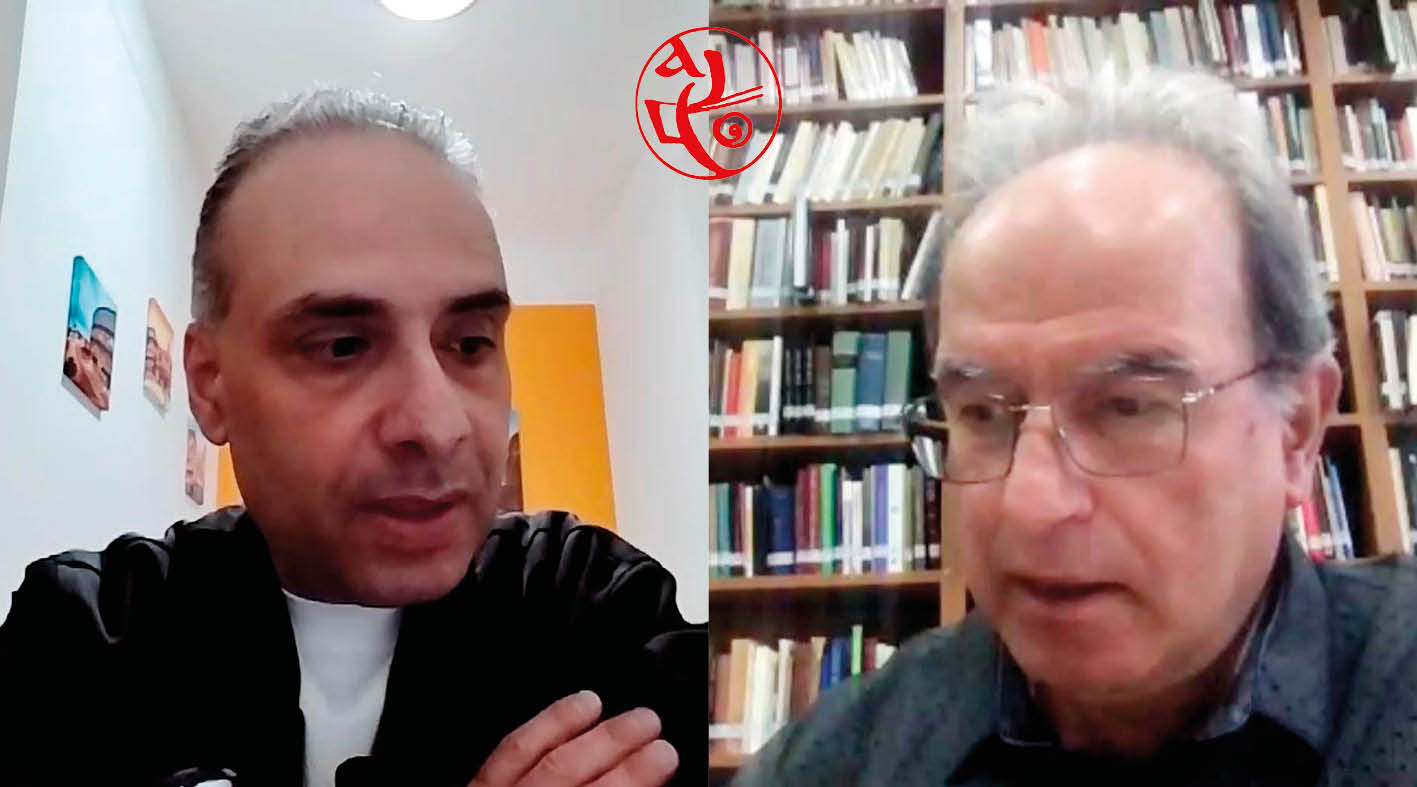
The online lecture on the topic “Christians in the Middle East: Challenges and Choices” was held on Monday, April 28, 2025. The speaker was Dr. Ziad El Sayegh, Director of the Civic Influence Hub (CIH) of Lebanon. The event was part of the “Time for Action” series of events of Volos Academy for Theological Studies, and it was coordinated by Dr. Pantelis Kalaitzidis, Director of the Volos Academy.
The speaker presented the major challenges Christians face in the Middle East today, sketching out the approaches that frequently exacerbate the real difficulties. He spoke about the need for participation of Christians in civil society, as a guarantee of public order and of the policies for public benefit and sustainable governance, abandoning the instrumentalization of religion aiming at political goals or temporary gains, as well as political professionalism. He referred to the characteristics that Christians should voluntarily renounce, such as minoritism, and stressed that all religions and all doctrines should support religious freedom, respect for dignity, peace and mutual understanding within the framework of a democratic society. After all, as he said, “Christianity, with love, service and prophetic witness, invites believers to actively participate in building a society with dignity and freedom, alongside Muslims, secularized citizens and all people of good will.” He discussed problems such as the bulge of the majority and the need to overcome ethnic, sectarian or religious definitions and presented the importance of respect for human rights and civic responsibility, which emerged with the Arab Spring. He stressed the need for cooperation among Christians, Jews and Muslims, as historical partners in the Arab world, but also the need to jointly confront extremism and concluded that religion can never be an excuse for the exercise of violence or injustices, as often happens in the region, with the most characteristic example being the unresolved Palestinian problem and the occupation of Palestinian territories on the basis of biblical passages.
The speech was followed by a discussion, where, among other things, the question was raised as to whether it is possible to implement such innovative ideas, especially within authoritarian and hostile contexts, which in most cases lack democratic education and experience. Concern was expressed that the whole approach might be overly optimistic. The discussion touched also timely cases (Gaza, Palestinian territories in the West Bank, Syria, Lebanon, Egypt) and the crucial issue of the fate of the Christian communities in the region, which face existential threats such as the Israeli occupation and the Islamic radicalism, as well as migration and abandonment of the ancient cradles of Christianity in the Middle East. The video recording of the event is available on the Academy's YouTube channel, at https://youtu.be/gB3K0TKvSI4
in Greek and at https://youtu.be/ffMGPDDQuGk in English, while the next event in the series will take place on May 12, with Rev. Cyrill Hovorun as speaker.